Showing posts with label radial. Show all posts

Saturday, January 28, 2012

New CSS Image Values and Replaced Content Module Level 3 - 2012.01.12 | w3.org

CSS Image Values and Replaced Content Module Level 3:
January 12, 2012
w3.org example
background: linear-gradient(45deg, white, black);
An image showing a box with a background shading gradually from white in the bottom-left corner to black in the top-right corner. There is a line, illustrating the gradient-line, angled at 45 degrees and passing through the center of the box. The starting-point and ending-point of the gradient-line are indicated by the intersection of the gradient-line with two additional lines that pass through the bottom-left and top-right corners of the box.

4.1.2. Linear Gradient Examples
*  

linear-gradient(135deg, yellow, blue);
linear-gradient(-45deg, blue, yellow);

4.2.4. Radial Gradient Examples
*  
radial-gradient(farthest-side at left bottom, red, yellow 50px, green);
NOTE: THOSE ARE THE ACTUAL THE CODE PARAMETERS

*  
repeating-radial-gradient(circle closest-side at 20px 30px, red, yellow, green 100%, yellow 150%, red 200%)


Related articles

Friday, May 27, 2011

Antiques: Pennsylvania redware flaunts its colors at Brandywine | Philadelphia Inquirer

Antiques: Pa. redware flaunts its colors at Brandywine | Philadelphia Inquirer | 05/27/2011:
A rare sugar bowl , circa 1840, attributed to Henry Grady of Somerset County, sold at Pook & Pook in October for $59,250.
"1840, attributed to Henry Grady of Somerset County, sold at Pook & Pook in October for $59,250."


Serious collectors will seek out larger pieces and unusual shapes, colorful slip designs, and incised inscriptions that add context. Pook explained, "You want to have some sort of slip decoration - wavy lines, for example - and the more ornate that is, the higher the price."
The redware display ties into the current exhibition at Winterthur, "Paint, Pattern and People: Furniture of Southeastern Pennsylvania, 1725-1850." An expedition to both museums makes a perfect day's outing.

Read more: http://www.philly.com/philly/entertainment/20110527_Antiques__Pa__redware_flaunts_its_colors_at_Brandywine.html#ixzz1Na9VyBKH
Watch sports videos you won't find anywhere else


Enhanced by Zemanta

Friday, May 6, 2011

Kaleidoscope Seed Bead Tapestry Pattern by polymerclaybeads | @Etsy

Kaleidoscope Seed Bead Tapestry Pattern by polymerclaybeads:
Kaleidoscope Seed Bead Tapestry Pattern
"This original pattern by Julie L. Cleveland is for an untitled tapestry of a Kaleidoscope Image. The piece is derived from an original digital art piece. The final piece is 8 inches wide by 8. I set the pattern up for 11 Delicas in loom format.

This pattern's loom grid prints for a full 22 pages and in full manufacture's color codes. It estimates at 19,200 beads."

Related articles
Enhanced by Zemanta

Tuesday, May 3, 2011

Lunchtime: First crop circle of the season Wiltshire UK | Mail Online

First crop circle of the season appears in historic Wiltshire field | Mail Online:
A field of bright yellow oil seed rape has been transformed by a huge, floral crop circle
"An elaborate 100ft circle which appeared overnight has caused a stir after it was found in a field of oil seed rape near Silbury Hill, Wiltshire.

The extraordinary floral creation is comprised of six interlocking 'petal' like crescents.

The ancient site, the tallest prehistoric man-made mound in Europe, is considered a hot spot for the bizarre phenomena and this new design proves the crop circle season is now under way."

Related articles
Enhanced by Zemanta

Monday, May 2, 2011

Lunchtime: GuillochĂ© Patterns security pattern bank notes + stock certificates anti-counterfeiting • (via subblue)

GuillochĂ© Patterns • subblue: Pattern generator
guilloche 1223715406
"If you wanted to design your own bank notes or passport you might consider using a Guilloché pattern as one of your anti-counterfeiting measures.
I first heard about Guilloché patterns in a recent post over at the Ministry of Type blog run by Aegir Hallmundur. Guilloché machines (also known as geometric lathes) have been used since the 17th century by watchmakers and goldsmiths, such as Fabergè, for for ornamentation."


Related articles

Saturday, April 30, 2011

Thursday, April 28, 2011

Quilts on display today at Meadows | Worthington (Minnesota) Daily Globe

Quilts on display today at Meadows | Worthington Daily Globe | Worthington, Minnesota:
Brian Korthals/Daily Globe
Eleanore Ebeling sits with one of her large handmade quilts
at her home in The Meadows in Worthington.

"Today, from 2 to 5 p.m. in the activities room at The Meadows, a variety of Ebeling’s quilts and wall hanging will be displayed. From light-hearted florals to a kaleidoscope of riotous color, the quilts are sure to brighten up anyone’s day, so she encourages people to stop by.

Ebeling started quilting when she and her husband lived in rural Brewster, but after they moved into Brewster, she really got busy with it.

“I had more time when we moved into town,” she said. “I quilted a little bit on the farm, but once we moved to Brewster, I had a room set up for it.”

Saturday, April 23, 2011

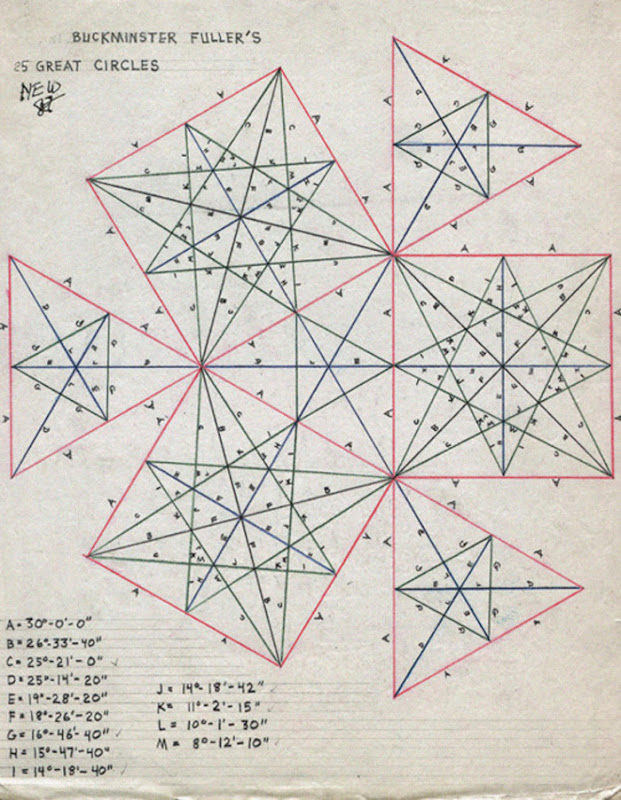
Great circles of Buckminster Fuller & more articles - kim manfredi « L O L I T A - Lolitas blog

kim manfredi « L O L I T A - Lolitas blog about fashion photography graphic design interior art lifestyle inspiration:
"great circles. or stars. and the days are getting longer, the trees are getting bud:ier"

Related articles

Brunch: 3 1/2 minute egg yolk broke L O L I T A blog somewhere in Scandinavia (?)

eastern promises « L O L I T A - Lolitas blog about fashion photography graphic design interior art lifestyle inspiration


Consistently beautiful mysterious gauzy gorgeous images and inspiration from somewhere in Scandinavia (?)    L O L I T A

Tuesday, April 19, 2011

Kiki Smith stained glass rose window | Museum at Eldridge Street, NYC + more stained glass

Kiki Smith stained glass window
(click for larger image in new window)
"Stained glass rose window for the Museum at Eldridge Street Synagogue in New York City (April 2011). Glass design by Kiki Smith and Deborah Gans."

In a recent tour of the museum by the Architectural League of New York, artist Deborah Gans talked about the process of creating the window with Kiki Smith and weaving symbolic elements into the design.

The window was made by putting a thick coating of liquid silicone on top of the base layer, and then "floating" hundreds of odd-shaped pieces of stained glass into place. Each panel is created separately and then left to cure to form a solid sandwich of glass with the silicone in the middle. The silicone remains completely transparent over time and will be flexible enough so the entire rose window can expand and contract to resist changes in temperature without damaging the stained glass.


See more images at Tumblr:


Related articles

LinkWithin

Related Posts Plugin for WordPress, Blogger...